
Both chevron and herringbone flooring are timeless, elegant flooring styles inspired by traditional parquet design. At first glance they may appear similar, but each pattern has distinct structural and visual differences that impact the overall look and feel of a space. Understanding these differences is essential when selecting the right flooring design for your home before placing an order and scheduling installation.
The chevron flooring pattern is a classic design that dates back centuries, with origins traced to Ancient Greece and the Middle Ages. This elegant flooring style is created by cutting wood planks at precise angles and joining them together to form a continuous V-shaped zig-zag pattern, delivering a clean and structured visual effect.
Chevron wood flooring is known for its modern, stylish, and flowing design, making it a popular choice for both contemporary homes and Scandinavian-inspired interiors. It adds depth, movement, and sophistication to any space, enhancing overall interior aesthetics.
Use light pine or white-painted chevron flooring to achieve a bright, airy, and minimalist Scandinavian-style interior that feels open and modern.
Combine different wood tones to create a bold, eye-catching statement floor that enhances the character of larger living spaces.
Chevron flooring inspiration extends beyond wood, influencing modern home décor such as rugs, cushions, and textile patterns for a coordinated interior style.
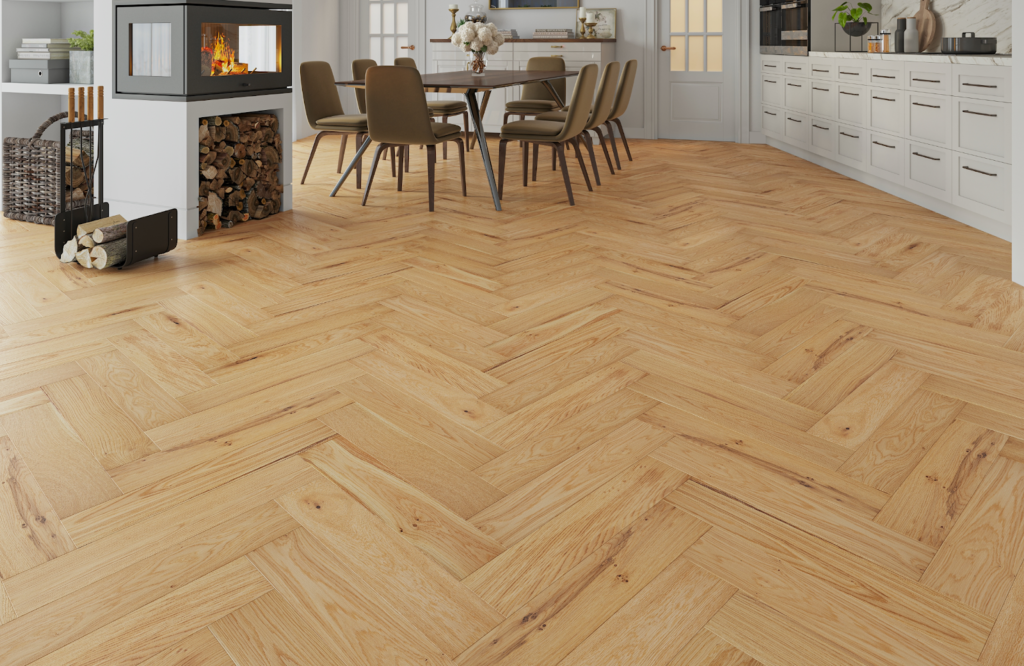
Herringbone flooring has a rich history dating back even further than chevron, with early examples found in Ancient Rome, where the pattern was used in road construction, and in Ancient Egyptian design and craftsmanship. Unlike chevron, herringbone planks are cut straight with 90-degree angles and laid in an alternating pattern, where each plank meets the next to form a distinctive staggered zig-zag effect.
Herringbone remains one of the most popular flooring styles in modern interiors thanks to its timeless elegance and heritage-inspired appeal. It is commonly used in a variety of spaces, including:
Living rooms, where wood or engineered wood herringbone flooring creates a warm, sophisticated, and classic interior feel.
Bathrooms, where tile or stone herringbone layouts offer a stylish, durable, and water-resistant flooring solution.
Driveways and patios, where brick herringbone patterns are widely used for strength, grip, and long-lasting outdoor performance.
By selecting different plank widths, lengths, and finishes, you can fully customise the look and feel of your herringbone flooring. For example, Gulcarpet’s luxury vinyl Finesse Collection offers narrower, smaller herringbone planks designed to replicate a vintage parquet aesthetic, making it ideal for achieving a refined Parisian interior design style.
Plank Cuts: Chevron flooring planks are cut at a diagonal angle, while herringbone planks are cut at a 90-degree angle.
Patterns: Chevron creates a clean, continuous V pattern, while herringbone creates a staggered zig-zag effect.
Room Impact: Chevron flooring can make a room feel wider and more modern, while herringbone adds classic depth and sophistication – especially in large or traditional homes.
Both chevron and herringbone flooring require skilled installation. They are generally more expensive to fit than straight plank flooring because:
Boards need to be cut precisely at either diagonal or 90-degree angles.
The layout must be measured carefully to align the patterns.
Different flooring fitters may charge differently for chevron vs herringbone installation.
At Gulcarpet, we offer a professional flooring fitting service to ensure your chosen pattern is installed perfectly.
Chevron Flooring → Creates a V-pattern, modern and stylish.
Herringbone Flooring → Creates a staggered zig-zag pattern, elegant and traditional.
Both are more expensive to fit compared to standard straight flooring.
Chevron planks are cut diagonally; herringbone planks are cut at 90 degrees.
Available in laminate, engineered wood, and luxury vinyl options at Gulcarpet.
Explore our AQ Carpets Inspiration Hub for the latest interior trends, carpet styling tips, and expert guides to make your flooring project effortless and enjoyable.